

Foraging for the edible plants of the Central Coast wilds, from miner's lettuce to lamb quarters.
by Garrett McAuliffe
What’s to eat deep in the forest when you’ve left your trail mix behind? Unless you live in a German fairy tale, chancing upon a gingerbread house is unlikely. And don’t count on that trail of breadcrumbs. But there’s still plenty to sample in these spring woods. So set your inner gatherer loose, for while most edible wild mushrooms are in seasonal decay and the burst of summer berries has yet to begin, spring is the time of salads—of tender, young shoots, crunchy greens and delicately sweet flowers.
Read Huckleberry Hounds
Read Operation Fungus Fair
But before you go nibbling willy-nilly at nature’s salad bar, remember that foraging can be dangerous if you ingest the wrong plant. Be meticulous in your identification. Follow an illustrated field guide and learn basic plant features to make identification easier. And look in places that are free of pesticides and away from the road. Around Santa Cruz and the Bay Area, there are a ton of foraging resources including classes, workshops and guided hikes, plus dozens of websites and books to help get you started. And please try to harvest responsibly, in a way nature can sustain. Here are a few common wild edibles in our area to begin your foraging adventure.
 Redwood Sorrel (Oxalis oregana) On almost any walk through lowland redwood forest, this tart and tasty trail snack is bound to be at your feet. Redwood sorrel looks similar to shamrock and is perfect to add to a salad or use to make pesto in place of basil. Munch it, don’t glom on it—high levels of oxalic acid can upset some stomachs.
Dandelion (Taraxacum) The cheery yellow blossoms and spear-like leaves of this common “weed” are easily recognized. Leaves, roots, crowns and stems are all edible and packed with calcium and other minerals and vitamins. Pick leaves for salad early in spring, when they’re not as squinchingly bitter. And gather the slightly sweet blossoms when fully open to eat, or batter in a tempura.
Miner’s Lettuce (Claytonia perfoliata) Like redwood sorrel, this fresh find is commonplace in our mossier woods. Take a nibble, and you’ll discover a lush, mild-flavored salad green, pleasingly crunchy and loaded with vitamins. Gold Rush miners ate it to stave off scurvy. Miner’s lettuce is one of only a few common edible plants endemic to North America, so it’s a chance to enjoy something indigenous to snack on. Unlike many spring greens, it keeps its flavor when in flower.
Chickweed (Stellaria media) A prolific annual that overruns gardens, this European import blooms in late winter in our mild climate and can be found in shady, moist woodlands. Mild in flavor, you can clip the tender tips off with scissors and eat them raw or steam lightly. Chickweed can be added to soups, salads and stir-fries or juiced with carrots and other veggies. The entire plant is edible.
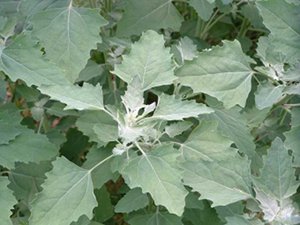 Lamb’s Quarter (Chenopodium berlandieri) A delicious “weed” that appears in disturbed soil, mostly gardens and fields, especially where animal manure has been used. Leaves are wedge-shaped, and flowers are inconspicuous. Collect the whole plant in spring and just the tender leaves in summer. Nibble as a snack or add to salads. Like sorrel, lamb’s quarter contains oxalic acid, which can bind with calcium in the body to damage kidneys if eaten in excess.
Pineapple Weed (Matricaria discoidea) A wild chamomile that thrives along hard-packed ground on walking paths, driveways and gravel roadsides. If you rub the petal-less flowers between your fingers, you’ll notice a fresh pineapple scent. Pick the flowers throughout spring and summer and add to salads and soups. Or nibble as a snack or steep for tea.
 Blue Elderberry (Sambucus cerulea) Most know these small deciduous trees for their late-summer berries, but the flowers have their own curiously fragrant flavor. Gather the flowers at their peak in early summer. They tend to pass quickly, so keep an eye out for when they first appear. Added to a pancake or muffin batter, they add a floral, buttery dimension. Or try simple elderflower fritters with your favorite tempura batter. As with the berries, flowers should be cooked if you’re eating more than a few out of hand. (Photo by Stan Shebs/Creative Commons)
Crimson Columbine (Aquilegia formosa) Found sporadically in many habitats, these perennial woodland plants bear yellow flowers with long crimson spurs. The flowers droop their yellow heads to the ground, and are a favorite of hummingbirds—for good reason, as the spurs are often filled with nectar and make the sweetest snack. Only eat the flowers, as the rest of the plant contains cyanide-producing glycosides.
 Stinging Nettle (Urtica dioica) Bursting with spinachy flavor and nutrition, and very easy to identify, stinging nettle lives up to its name. So wear gloves and harvest in early spring, when the plants are under a foot in height and before they’ve begun to flower. Nettles must be briefly steamed or boiled to tame their sting. (Photo by Phil Bendle/Creative Commons)
Manzanita (Arctostaphylos) Thickets of these evergreen shrubs, easily recognized by their smooth, mahogany-colored bark, are found on dry slopes and chaparral, typically at higher elevations throughout the area. Manzanita blooms in early spring, and its fruit appears later in the season. The berries and flowers of most species are edible. Manzanita means “little apple” in Spanish, and the berries look the part, turning from green to reddish-brown when ripe. They were eaten raw or crushed for drinks by natives of California. Younger leaves can be chewed to deter thirst, but neither leaves nor berries are particularly tasty.
Category:


