




Exploring the spread of West Nile virus.
by Maya Desai
Aug. 6, 2014—In 2004, two scientists made a bet. At the time, West Nile virus was raging westward across the United States. The scientists were studying ways to keep the virus from reaching Hawaii, where it could ravage native birds. Marm Kilpatrick bet that within 10 years, West Nile would get to the islands. His colleague Nicholas Komar, a biologist at the U.S. Centers for Disease Control, bet that it would not. The stakes of their bet: a carbon-fiber tripod, used for their shared hobby of photography.
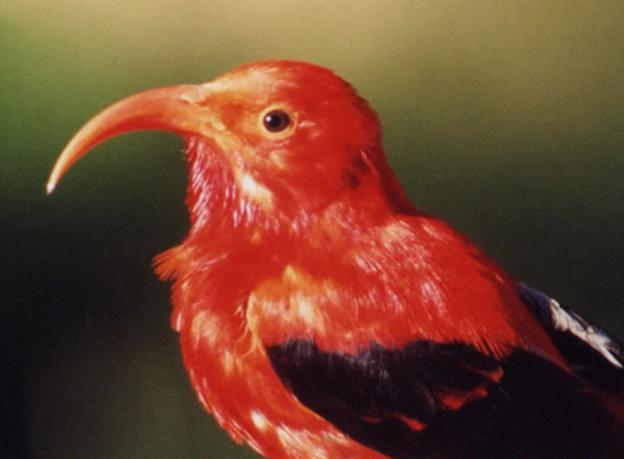
Also at stake: the survival of many endangered Hawaiian bird species. But we are now more than halfway through 2014, and Hawaii is still free of West Nile. “So far, I’ve been happy to be wrong,” says Kilpatrick. “If I win, then I win, and if I lose, then I’m happy I lost."
Kilpatrick, a disease ecologist at UC Santa Cruz, has examined West Nile virus since 2003, four years after it first came to the U.S. He and his team first tackled the basics of West Nile ecology. Now they are studying ways to keep the virus from reaching island groups, where it could destroy bird populations. Closer to home, they also investigate how farms and other human land use affect West Nile transmission and what climate change might mean for the disease, which has sickened 11 people in California thus far in 2014.
West Nile virus exists in a knotted web of birds and mosquitoes. The disease flutters from birds to mosquito vectors and back again to birds. When a mosquito bites an infected bird, the mosquito carries the disease to the next bird it bites. Humans—and mammals in general—are dead-end hosts for West Nile. We may become infected, but we are not contagious. So to learn about the ecology of West Nile virus, scientists look first toward mosquitoes and birds.
The West Nile–Bird Connection
In 1999, West Nile's first year in the U.S., the virus killed almost every American crow and blue jay it touched. When scientists experimentally infected birds in labs—necessary research that Kilpatrick jokingly calls “Dr. Evil” experiments—all crows and 75% of blue jays died within two weeks. Humans are less vulnerable. In four out of five people, the virus causes no symptoms. But the rest develop a fever with fatigue and headache. Less than 1% of the people infected will suffer a severe neurological illness, but 10% of those will die. In 2013, the virus killed 119 people in the U.S.
But Kilpatrick is a disease ecologist, not a doctor. He is less interested in the symptoms of a malady, and he’s not looking for a treatment. Instead, he studies how a pathogen spreads through a population, and which behaviors and environments fuel its spread. This research is crucial in the fight against infectious diseases.
West Nile virus ecology was a relatively new field when Kilpatrick entered the picture, so he started from scratch. One of his first discoveries was that in the eastern U.S., American robins spread 80% to 90% of the disease’s cases, a wildly disproportionate number considering that American robins made up only 3% to 5% of birds at their test sites. “Mosquitoes appear to really, really like [American robins], so they’re actually fed on much more than you’d expect by chance,” says Kilpatrick. “That was super shocking to everyone.”
The mosquitoes themselves were the next shock. Researchers initially assumed that the most important mosquitoes in human disease were those species that bite mammals. “People thought the bird biters can’t be involved because they mostly bite birds,” says Kilpatrick. “Well, that’s true, but it turns out they mostly bite birds. They occasionally bite people.” And when bird biters set their sights on humans, they ferry the disease from birds to people.
A Wetland Is A Wetland—Or Is It?
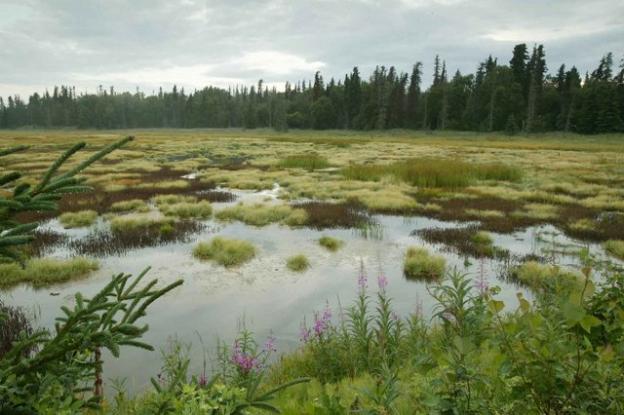
Tony Kovach is learning more about these bird biters. Kovach, a Ph.D. student in Kilpatrick’s group, studies mosquito species that harbor West Nile virus in wetlands north of Sacramento. Human influence on the land and its winged inhabitants fascinates Kovach. “A lot of these wetlands are just there because people made them,” says Kovach. Agricultural communities irrigate hillsides by pumping water uphill so it can flow down, nurturing lush hillside pastures for grazing. Water puddles where the land flattens, creating wetlands. Kovach’s hypothesis is that irrigated wetlands are different from regular wetlands, which could affect their mosquito populations.
Besides comparing wetland types, Kovach also studies how the surrounding farm and land usage affects the mosquito populations. “A lot of people demonize wetlands because wetlands seem like a big source of mosquitoes. But if the surrounding land use also has habitats suitable for mosquito larvae, than the wetland may not matter as much,” explains Kovach. “It kind of just depends on the context of where the wetlands are.”
For example, rice fields and their standing water may actually breed more mosquitoes than wetlands. Kovach also wonders whether cattle play a part. When nearby land is used for grazing, mosquitoes may turn to cows instead of birds for their blood meals, which would lower their rate of West Nile. Scientists tested this idea in areas of Africa with high malaria transmission by bringing cattle to sleep near people at night, hoping to divert hungry mosquitoes. The results were inconclusive.
Kovach and his field technicians work in rural agricultural areas. To trap the live mosquitoes they study, they must avoid bulls, climb barbed-wire fences, and dodge rattlesnakes. Carbon dioxide, a gas that animals naturally exhale, is the mosquito bait. For the traps, the carbon dioxide comes from dry ice. As mosquitoes approach the trap, a fan sucks them in. “It’s a really simple, kind of silly trap design,” says Kovach. But it works. On a good day at the height of mosquito season, a single trap can catch up to 10,000 of the insects.
By this fall, Kovach will have almost 2 million mosquitoes deep-frozen and awaiting analysis. “I think the unique part of my project is linking the human aspect, land use and irrigated versus non-irrigated—how people are creating these wetlands, and how it’s affecting the risk of disease,” he says. After crunching the data, he hopes to have answers.
Kovach’s results could protect birds. He collaborates with a UC Berkeley team investigating the dwindling population of the California black rail, a threatened bird species. Kovach’s job is to discover whether West Nile worsened their decline, and what the species’ future might hold. Mosquitoes and black rails both need wetlands, so a decline in wetlands could hurt both. But if West Nile virus seriously jeopardizes the birds, a smaller mosquito population may ultimately help them, even at the cost of wetland habitat.
A Threat to Biodiversity
Worldwide, West Nile virus threatens many bird species. If the virus arrives at isolated island groups, it could deliver a fatal blow to struggling bird species. West Nile hasn’t yet crossed the Pacific to Hawaii or the Galapagos, but Kilpatrick wonders how long the peace can hold. The main risk, he says, is infected mosquitoes stowing away in airplane cargo holds. Insecticides could prevent this, but Kilpatrick is unsure whether airlines would cooperate to implement this plan and who would pay the cost.
Kilpatrick earned a master’s degree in mechanical engineering before switching to biology, and he has a practical, mathematical approach to conservation. “It would be disastrous for the Galapagos and Hawaiian birds if West Nile virus were to get there—so put a number on that,” he says. “How do you quantify the value of a species going extinct?”
Climate change may drastically alter how wildlife disease spreads globally, but we don’t yet know what to expect. Kovach and Kilpatrick are addressing parts of the challenge. Kovach is working with another UC Berkeley group trying to model how wetlands respond to climate change. If Kovach can piece together a connection between, say, wetland size and West Nile, he can use their models to predict how an evolving climate might affect the disease.
Even if climate change increases animal disease, this does not necessarily mean human disease will increase in parallel. Kilpatrick suspects that for humans, climate may play a relatively small role. Other factors may matter more in human disease, such as patterns of immunity that arise when a disease spreads through a population.
Of course, human behavior also matters. In the U.S., West Nile is most prevalent in the Midwest and Great Plains. Research suggests this arises from culture, not climate, Kilpatrick says. In these areas, he explains, people are outside more because of livelihood and lifestyle, getting far more mosquito bites than they would otherwise. In a similar vein, homeless people contract West Nile more often.
Despite this, death or severe sickness from West Nile in our country is relatively rare. “I’ve probably had West Nile,” Kovach jokes. After all, most cases are asymptomatic. “I think it’s more the idea of [West Nile virus] that people in the developed world are afraid of: the idea that a mosquito can bite a person and get them sick.”
Maya Desai, an undergraduate at UC Santa Cruz majoring in ecology and evolutionary biology, wrote this story in spring 2014 for BIOE 188: Introduction to Science Writing.
Category:


